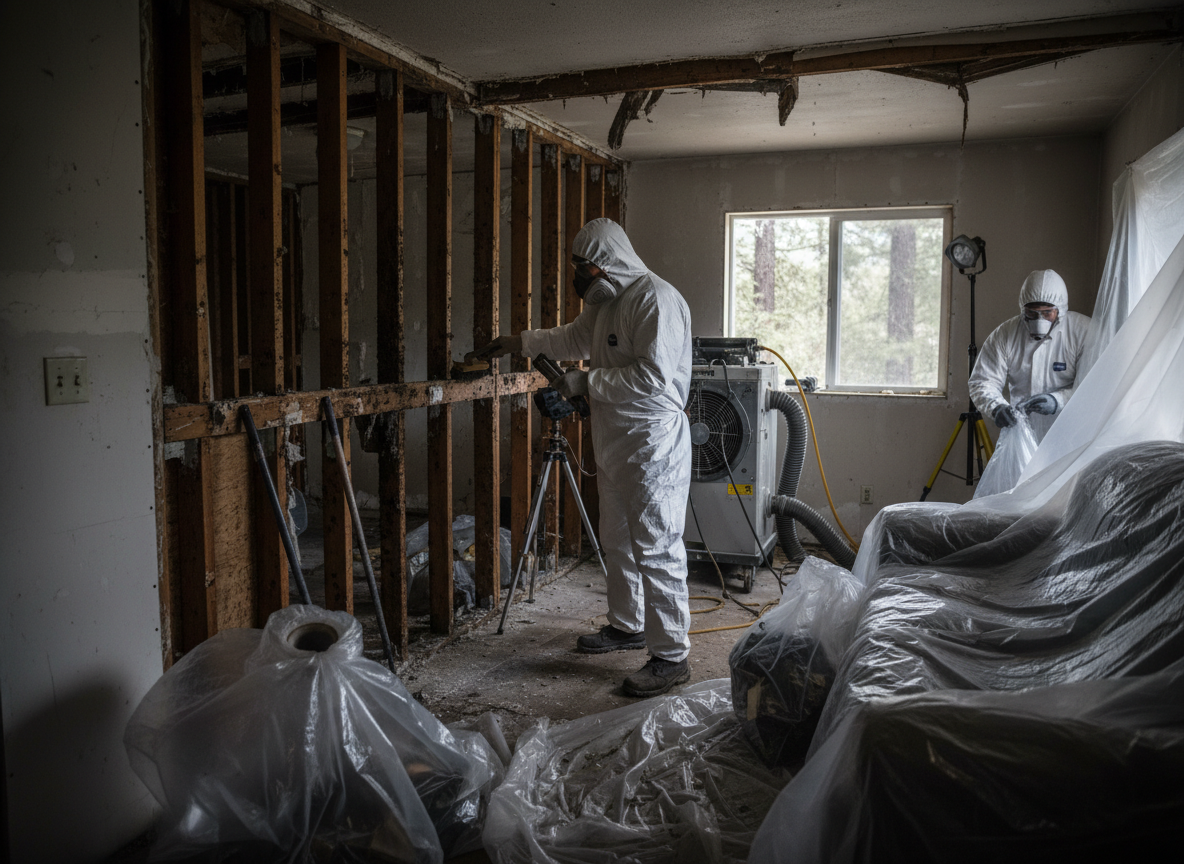
Skyforest sits in the San Bernardino Mountains where cold snowy winters give way to mild summers, creating repeated freeze-thaw cycles that stress plumbing and roofs. Water from melting snow often finds its way into crawl spaces and wall cavities of the older wood-frame cabins common along Kuffel Canyon Road and surrounding neighborhoods. Once moisture lingers, mold colonies establish quickly in the hidden framing before homeowners notice musty odors or staining. Remediation here requires removing saturated insulation and drywall while protecting the remaining structure from further water intrusion during the next storm cycle.
Edge cases in this terrain include attic mold driven by ice dams along eaves and hidden growth behind cedar siding on homes built before modern vapor barriers became standard. Containment must account for the steep driveways and limited access typical of Skyforest lots, so crews stage equipment at the 951 Kuffel Canyon Rd base and work in smaller teams. California building codes require proper disposal of contaminated materials and documentation of moisture levels before any reconstruction begins, especially when work touches load-bearing elements in older homes.
Mild summer temperatures slow drying compared with hotter inland valleys, so negative air machines and dehumidifiers often run for several days after physical removal. Homeowners in Running Springs and Lake Arrowhead report similar patterns when snow load pushes water under foundations. Addressing both the visible damage and the moisture source prevents recurrence during the next winter freeze.
Technician insight
In Skyforest, the thing that catches most people out with water damage mold remediation is how fast snow melt travels under the pier-and-beam foundations of older cabins along Kuffel Canyon Rd, soaking subfloor insulation that never gets a chance to dry before the next storm.
Crawl Space Mold After Winter Freeze
A Skyforest homeowner noticed a musty smell after a heavy snow melt. Inspection found standing water and mold growth on insulation beneath the living room floor. Crews removed the saturated material, dried the joists, and treated the space while sealing the exterior grade to limit future runoff. The home passed clearance testing and the odor did not return through the following spring.
How it works
- 1
Initial Assessment
Technicians inspect all affected rooms, attics, and crawl spaces using moisture meters and thermal imaging to map hidden water paths common in Skyforest mountain homes.
- 2
Containment Setup
Plastic barriers and negative air pressure isolate the work zone so spores do not spread to unaffected areas during removal.
- 3
Material Removal
Saturated drywall, insulation, and wood are cut out and bagged for proper disposal while preserving structural integrity of older framing.
- 4
Drying and Treatment
Industrial drying equipment runs until moisture readings meet industry standards, followed by antimicrobial application on remaining surfaces.
- 5
Final Clearance
Post-remediation testing confirms mold levels are controlled before any reconstruction planning begins.
Pricing
Cost depends on square footage affected, depth of hidden damage in crawl spaces, and length of drying time required by mountain humidity levels.