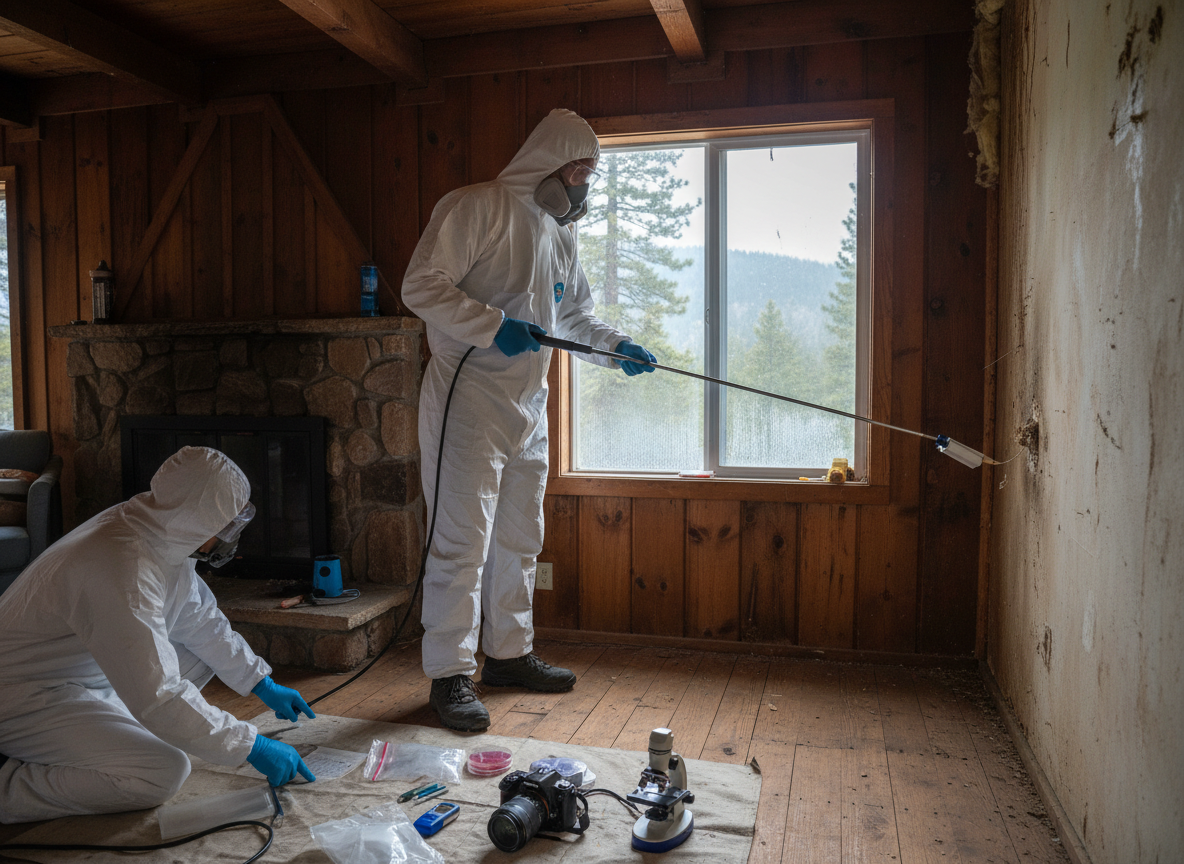
Skyforest sits at elevation in San Bernardino County where winter snow lingers on roofs and meltwater finds its way into attics and crawl spaces of older cabins and A-frame homes. Mold testing here starts with air sampling in living spaces followed by surface swabs in basements and behind drywall that homeowners rarely access. Cold temperatures slow visible growth yet trap humidity once spring arrives, so technicians check insulation batts and roof decking where condensation forms along the north-facing slopes.
Testing protocols account for the mild summers that keep windows closed and indoor humidity elevated after heavy snow years. Samples are collected from multiple zones including the area around the Skyforest Post Office where older post-war builds share similar framing and ventilation limits. Results guide whether remediation stays localized or requires opening walls in Running Springs-adjacent properties that share the same microclimate.
Edge cases appear when meltwater from Kuffel Canyon Rd properties travels along slopes and pools under slab foundations. Infrared scans combined with moisture meters reveal hidden pockets that standard visual inspections miss in these mountain lots. Homeowners often overlook how the county's freeze-thaw cycles open small gaps in flashing that later seed mold in wall cavities.
Documentation includes chain-of-custody forms for lab analysis and photos tied to each sample location so residents understand exactly which rooms tested positive. This level of detail matters when insurance claims arise for water intrusion tied to seasonal snow loads.
Technician insight
In Skyforest, the thing that catches most people out with Mold testing near me is how snow melt from the north side of the roof soaks into attic insulation on homes built before the 1980s. The freeze-thaw cycle opens gaps that standard visual checks miss until spring humidity spikes.
Attic Moisture After Heavy Snow
A Skyforest homeowner noticed musty air in the upstairs hallway after winter melt. Testing found elevated spores in the attic where insulation had absorbed water from a slow roof leak along the north slope. Samples confirmed the species and guided targeted removal of affected insulation without opening the entire ceiling.
How it works
- 1
Initial Assessment
Technician arrives at the Skyforest address and walks the property noting rooflines, drainage, and any recent snow melt patterns.
- 2
Sample Collection
Air and surface samples are taken from living areas, attics, and crawl spaces using calibrated equipment suited to mountain humidity.
- 3
Lab Analysis
Samples travel to a certified lab for spore identification while the technician reviews findings with the homeowner on site.
- 4
Report Delivery
A written report maps all positive locations and recommends next steps for remediation if needed.
Pricing
Pricing varies by square footage, number of samples, and whether attic or crawl space access is required; upfront quotes provided before work begins.