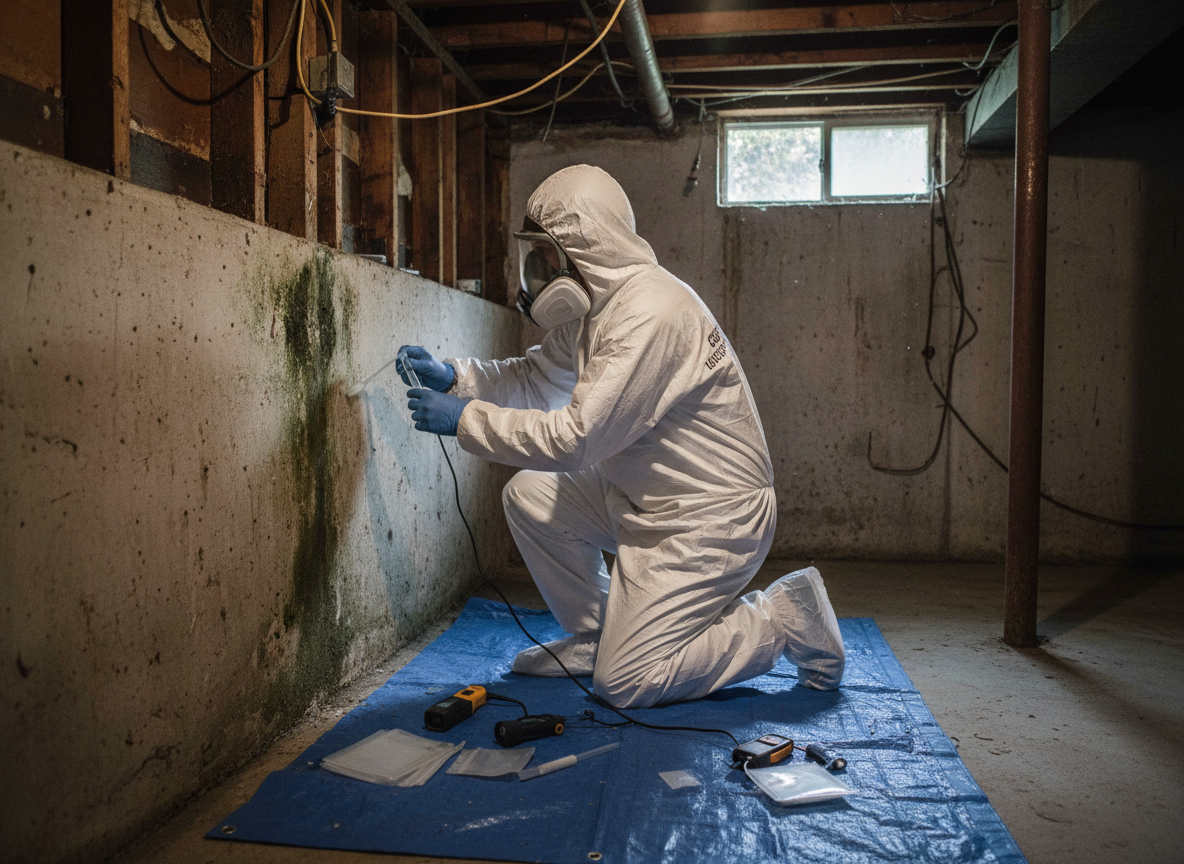
Skyforest sits at elevation in the San Bernardino Mountains where cold snowy winters followed by spring thaw send water into attics, underfloor cavities and along log or wood-frame walls common in homes near the Skyforest Post Office and Kuffel Canyon. A certified mold inspector checks for hidden growth that forms when meltwater sits against particleboard subfloors or behind cedar siding that never fully dries during the short mild summer. Inspections include moisture mapping with meters, borescope views into wall cavities, and air sampling at multiple elevations to account for stack effect created by steep terrain.
Older cabins built before modern vapor barriers often lack proper roof ventilation, so ice dams from heavy snow loads push water under shingles and into insulation. Inspectors pay special attention to north-facing slopes that receive less sun and retain moisture longer than south exposures near Running Springs. Findings are documented with photos and lab reports so homeowners can see exactly which building materials are affected before any remediation begins.
Because Skyforest properties sit on sloped lots with varying soil drainage, inspectors also evaluate exterior grading and downspout discharge points that can channel snowmelt toward foundations. This step catches moisture entry that would be missed by a standard visual check. Reports note any code-related ventilation shortfalls typical of pre-1980 mountain construction so owners understand what changes may be needed for long-term control.
The inspection concludes with a written scope that separates confirmed mold locations from moisture issues that could support future growth. This distinction matters in San Bernardino County where seasonal humidity swings after snowmelt can restart colonies in untreated wood within a single winter cycle.
Technician insight
In Skyforest the thing that catches most people out with certified mold inspector is spring snowmelt running under older cabin foundations on north-facing lots near Kuffel Canyon. Homeowners assume the short mild summer dries everything, yet the shaded soil stays damp long enough for mold to colonize subfloor plywood before anyone notices.
Hidden Attic Mold After Heavy Snow
A Skyforest homeowner noticed musty odor after winter snowpack melted. Inspection found ice-dam water had entered the attic through ridge vents on a north slope. Samples confirmed Penicillium growth in insulation; the report outlined removal of affected materials and improved ventilation to prevent recurrence during the next freeze-thaw cycle.
How it works
- 1
Initial Site Walk
Walk the exterior and interior noting rooflines, grading, and any visible water stains while documenting access points typical of Skyforest cabins.
- 2
Moisture and Thermal Survey
Use meters and infrared imaging on attics, crawlspaces, and walls to locate damp zones created by snow-melt intrusion.
- 3
Sampling and Lab Analysis
Collect air and surface samples from affected rooms and send them for identification of mold types common in mountain climates.
- 4
Report and Recommendations
Deliver a written report with photos, lab results, and prioritized next steps based on the specific construction found in the home.
Pricing
Pricing reflects property size, number of stories, and extent of access required in steep Skyforest terrain; quotes provided after the initial walk-through.