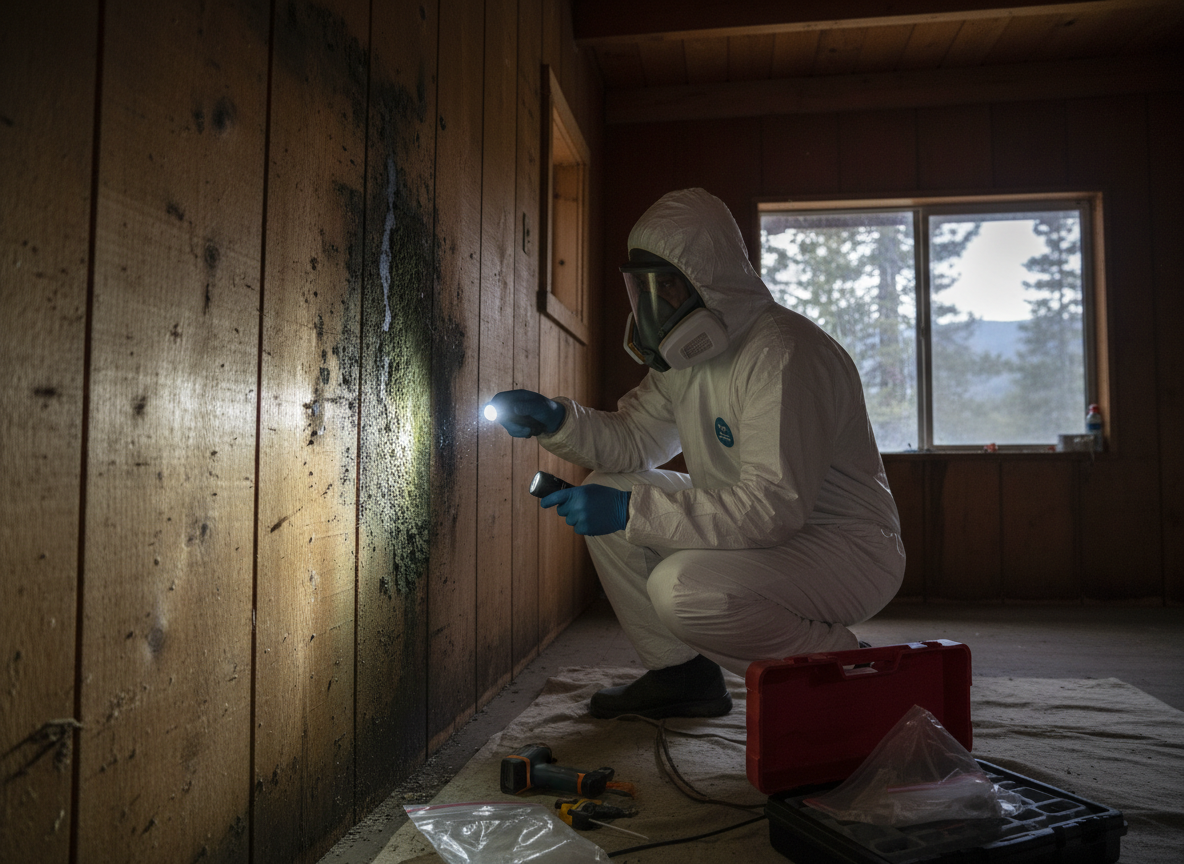
Skyforest sits at elevation in San Bernardino County where heavy winter snow followed by spring thaw frequently drives water under eaves and into attics of older wood-frame homes. Black mold often starts on roof sheathing or insulation above living spaces after ice dams form along the north-facing slopes near Kuffel Canyon. Inspectors must pull back insulation and use moisture meters on rafters that stay hidden behind finished ceilings in many 1970s and 1980s cabins.
Access challenges differ from flatland jobs. Steep driveways off Highway 18 and narrow lots near the Skyforest Post Office limit equipment staging, so crews often work with ladders and handheld tools only. Running Springs and Lake Arrowhead homes share similar roof pitches and crawlspace ventilation issues, but Skyforest properties sit higher and experience longer freeze-thaw cycles that crack exterior stucco and let meltwater reach framing.
During inspection we map every moisture reading on a floor plan, photograph suspect areas, and note HVAC returns that pull spores from wall cavities. San Bernardino County building practices from earlier decades left many homes without proper vapor barriers, so we check behind baseboards and in laundry rooms where dryer vents terminate too close to siding. Findings determine whether remediation stays limited to one room or requires opening larger sections of ceiling.
Technician insight
In Skyforest the thing that catches most people out with black mold inspection is snow melt running under the north eaves of homes built before modern flashing details. Those 1970s cabins along Kuffel Canyon Road often have insulation packed right against roof decking, so the first sign of growth is missed unless you actually pull back batts during the cold months.
Attic Growth After Heavy Snow
A Skyforest homeowner noticed musty odor in an upstairs bedroom after March thaw. We found black mold on roof sheathing above the master closet where ice dam water had wicked under the felt. Insulation was removed, affected boards treated, and new baffles added to improve ventilation before the next winter freeze.
How it works
- 1
Initial Site Walk
We arrive at the Skyforest address, note exterior grading and roof condition, then enter through the most accessible point while protecting floors.
- 2
Moisture and Visual Survey
Using meters and infrared we scan attics, crawlspaces, and wall cavities for hidden dampness caused by snow melt or ice dam leaks.
- 3
Sampling and Documentation
Air and surface samples are collected from affected zones, labeled by room, and cross-referenced to a simple site diagram for the owner.
- 4
Findings Review
We explain results on site, outline which materials need removal, and note any access limits created by the steep local terrain.
Pricing
Inspection cost depends on home size, number of stories, and how much insulation must be moved in cold attics.