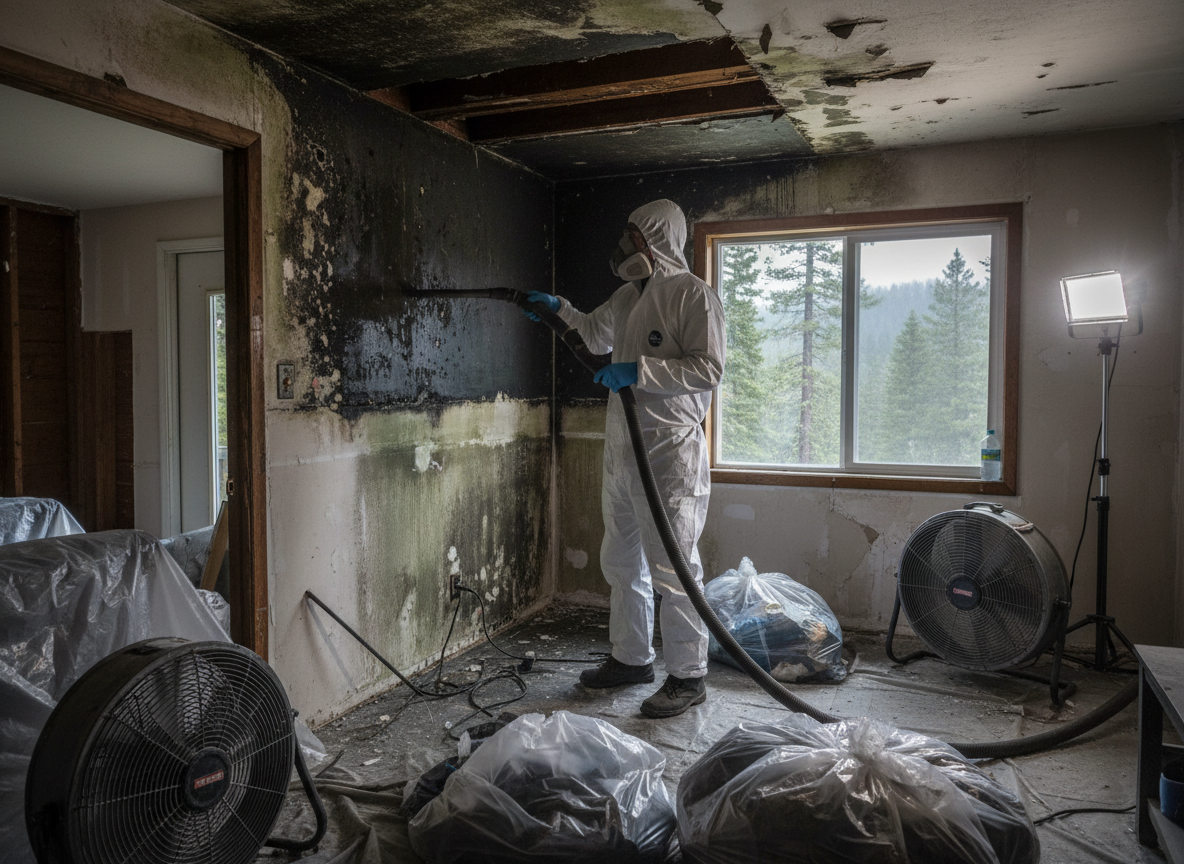
Skyforest sits in the San Bernardino Mountains where cold snowy winters drive moisture issues in homes built decades ago along routes like Kuffel Canyon Road. Snow melt and ice dams often push water behind siding or into attics of these older wood-frame cabins, allowing toxic mold to establish in hidden cavities before residents notice musty odors or health symptoms. Remediation requires isolating the affected zones, removing contaminated drywall and insulation, and drying the structure with equipment sized for the thin mountain air.
Mild summers do little to offset the winter moisture load, so crews working toxic mold removal in Skyforest routinely check crawl spaces and roof decks on properties near the Skyforest Post Office and toward Running Springs. Contaminated materials must be bagged on site to prevent spore spread during transport down the hill. Homeowners in Lake Arrowhead often face similar patterns, but Skyforest terrain adds steeper access challenges that change how containment tents and negative air machines are positioned.
Proper removal includes HEPA vacuuming of remaining surfaces and application of EPA-registered antimicrobials only after the moisture source is fixed. In San Bernardino County mountain homes, code requires proper disposal of moldy debris at approved facilities rather than standard landfills. Skipping these steps leaves spores that reactivate the next time winter snow sits on the roof.
Technician insight
In Skyforest, the thing that catches most people out with toxic mold removal is how quickly snow melt from a single warm spell travels under older roof decks on Kuffel Canyon Road properties and soaks insulation that never dries in the cold mountain air.
Hidden Attic Growth After Winter Storm
A cabin near the Skyforest Post Office developed black growth on roof sheathing after heavy snow sat for weeks. Inspection found water tracking from an ice dam into the attic insulation. Crews removed the saturated materials under full containment, dried the framing, and confirmed clearance before reinstalling insulation.
How it works
- 1
Inspection and Containment
Technicians arrive 24/7 at the Skyforest address, set up plastic barriers, and use moisture meters plus borescopes to locate all toxic growth without spreading spores.
- 2
Removal of Contaminated Materials
Affected drywall, insulation, and wood are cut out, double-bagged, and removed while negative air machines run to protect the rest of the cabin.
- 3
Cleaning and Drying
HEPA vacuuming and antimicrobial treatment follow, then industrial drying equipment runs until wood moisture readings return to safe levels for the local climate.
- 4
Final Clearance Testing
Air and surface samples are collected and sent for lab analysis to confirm the space meets post-remediation standards before barriers come down.
Pricing
Cost depends on square footage affected, depth of hidden growth in attics or crawl spaces, and how quickly crews can access steep Skyforest driveways after snow.