Skyforest sits at elevation in San Bernardino County where heavy winter snow followed by milder days creates repeated freeze-thaw cycles. These cycles push meltwater into attics, wall cavities, and crawlspaces of the older cabins and A-frame homes common along Kuffel Canyon Road and near the Skyforest Post Office. Once temperatures drop again, that moisture condenses on cold sheathing and insulation, allowing mold to establish behind finishes before homeowners notice any odor or staining.
Professional mold removal here starts with mapping moisture paths created by the local terrain. Steep lots and dense tree cover limit airflow around many properties, so south-facing walls stay damp longer while north sides collect drifting snow against foundations. Technicians must often open sections of roof deck or exterior siding to reach hidden growth that standard surface cleaning misses, especially in homes built before modern vapor-barrier standards.
After source removal, drying protocols account for the short summer window when outdoor humidity stays low enough to finish the job without re-wetting. Equipment placement must respect narrow driveways and shared wells common in the area, and final clearance testing focuses on both living spaces and the unconditioned attics that connect directly to bedrooms in many Skyforest layouts.
Technician insight
In Skyforest, the thing that catches most people out with professional mold removal is how snow drifts against the north side of older cabins along Kuffel Canyon Road push meltwater under the sill plate. Homeowners treat the obvious ceiling stain but miss the ground-level entry point, so the same colony returns every spring until the foundation drainage is fixed.
Hidden Attic Growth After Heavy Snow
A homeowner near Running Springs noticed a musty smell in the upstairs bedroom after the first big melt. Inspection found mold on roof sheathing where ice dams had forced water under shingles. We contained the attic, removed saturated insulation, treated the wood, and improved ridge ventilation so the space could dry during the short summer window.
How it works
- 1
Detailed Moisture Mapping
Technicians inspect attics, crawlspaces, and wall cavities using meters calibrated for mountain temperature swings to locate every active leak path created by snow melt.
- 2
Containment Setup
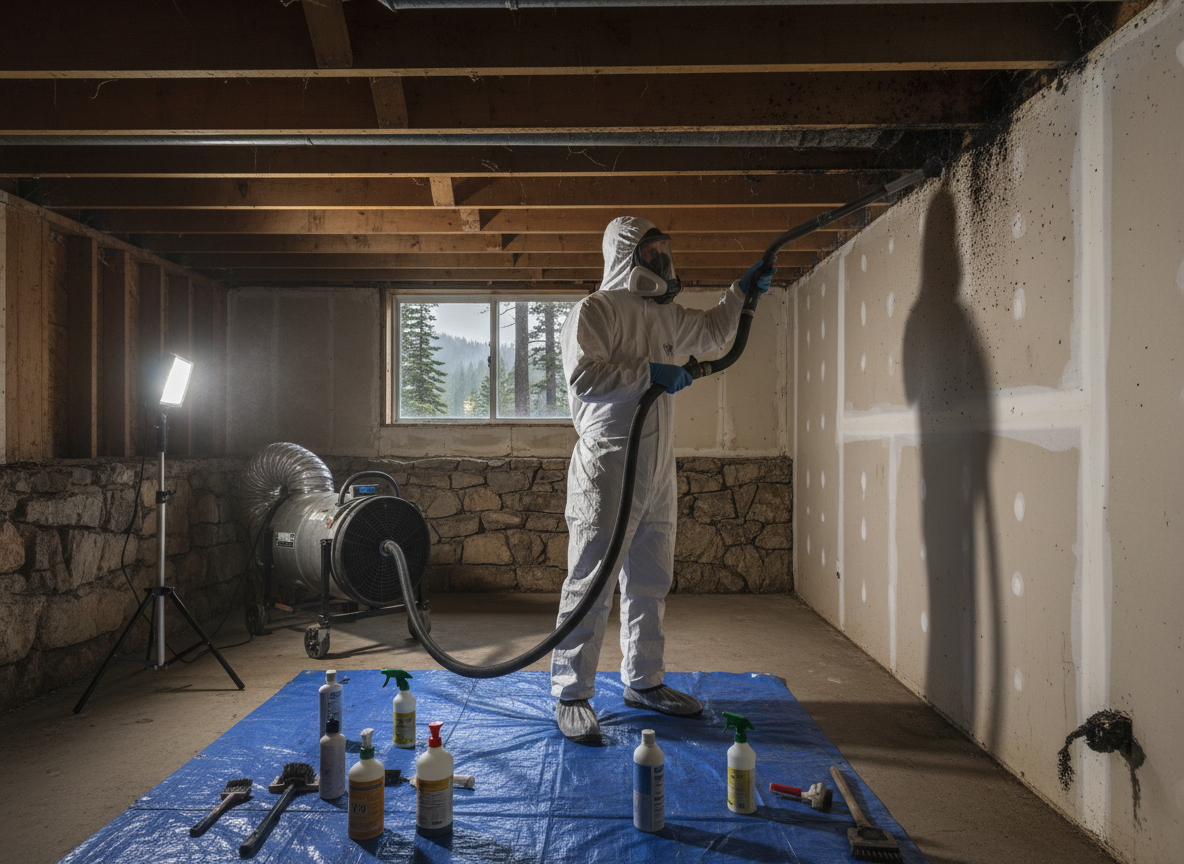
Plastic barriers and negative air machines isolate work zones so spores do not migrate into living areas during removal, critical in compact Skyforest floor plans.
- 3
Source Removal and Cleaning
Affected insulation, drywall, and wood are removed or treated with EPA-registered antimicrobials; HEPA vacuums capture remaining particles before disposal.
- 4
Drying and Verification
Industrial dehumidifiers and air movers run until moisture readings match dry standards for the season, followed by independent air sampling to confirm clearance.
Pricing
Pricing varies by the extent of hidden growth, access difficulty on steep lots, and whether roof or foundation work is required alongside removal.