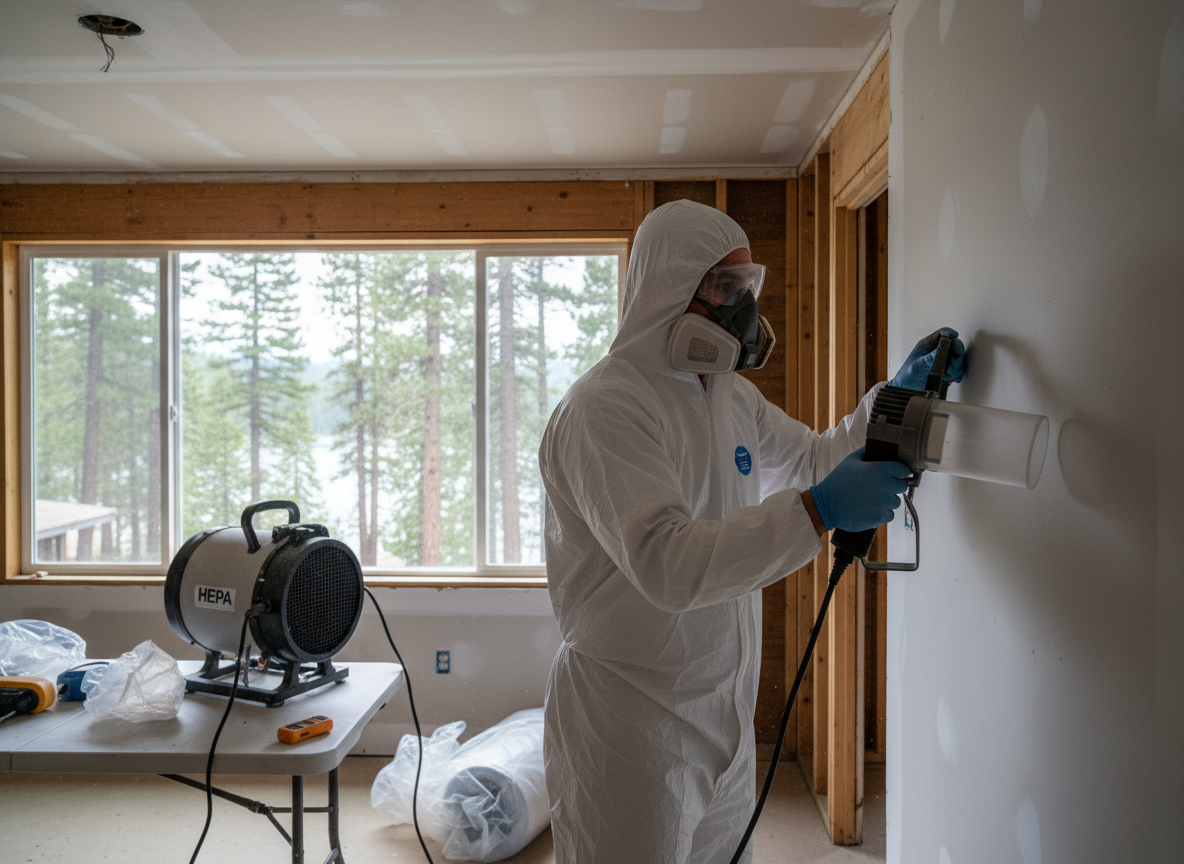
Post remediation mold testing in Skyforest focuses on confirming that remediation has eliminated active growth and spores from structures affected by the area's mountain climate. Cold snowy winters often lead to ice dams and subsequent meltwater intrusion in attics and crawl spaces of older homes near the Skyforest Post Office and along routes toward Lake Arrowhead. Technicians collect air and surface samples from multiple zones, comparing them against outdoor controls to detect any remaining contamination that could reestablish in mild summer humidity. Edge cases include hidden moisture trapped in wall cavities of homes built before modern vapor barriers became standard in San Bernardino County.
Sampling protocols account for Skyforest's terrain and seasonal shifts, where runoff from surrounding slopes can reintroduce water into basements or under pier-and-beam foundations common in Running Springs-adjacent properties. Clearance criteria require spore counts to align with outdoor baselines rather than absolute zero, acknowledging that mountain air naturally carries some mold. Reports detail locations, methods, and any follow-up recommendations without relying on visual inspection alone, which often misses microscopic residues in textured wood or insulation materials typical of local cabins.
Homeowners sometimes request testing too soon after remediation, before drying is complete, which can produce misleading results in the damp conditions that follow winter storms. Proper timing involves waiting for moisture meters to read below 15 percent in affected materials, then conducting both viable and non-viable sampling. This approach prevents unnecessary repeat remediation while addressing the real risk of cross-contamination between Skyforest neighborhoods during high-wind events.
Technician insight
In Skyforest, the thing that catches most people out with post remediation mold testing is snow melt from our cold winters pooling under older pier-and-beam homes near Kuffel Canyon Road, which can trigger false negatives unless samples are pulled from subfloor cavities after full drying.
Hidden Moisture In Attic After Winter Melt
A Skyforest homeowner noticed musty odors weeks after remediation following heavy snow. Testing revealed elevated spores in attic insulation where meltwater had soaked rafters near the Skyforest Post Office. Additional drying and targeted removal were performed, followed by retesting that confirmed clearance levels matching outdoor air from the surrounding San Bernardino County mountains.
How it works
- 1
Site Walkthrough And Moisture Mapping
Inspect all previously affected areas and adjacent spaces for residual dampness using meters calibrated for local wood species.
- 2
Sample Collection
Gather air, swab, and tape-lift samples from interior zones plus an outdoor reference point near the Skyforest Post Office.
- 3
Laboratory Analysis
Submit samples to an accredited lab for spore identification and concentration comparison against regional mountain baselines.
- 4
Clearance Report Delivery
Provide documented results with photos and specific guidance if any locations require additional drying or containment.
Pricing
Cost depends on square footage, number of samples, and accessibility in mountain terrain; upfront quotes provided after initial assessment.