Skyforest sits at elevation in San Bernardino County where winter snow loads on roofs and decks often push water behind siding and into attics of 1960s-1980s cabins. Once temperatures swing from freezing nights to mild days, that trapped moisture feeds mold colonies whose volatile organic compounds travel through HVAC returns and crawl spaces, producing the musty smell homeowners notice first. Odor removal here requires locating the actual growth behind insulation rather than masking it with foggers that fail once snow melt resumes in spring.
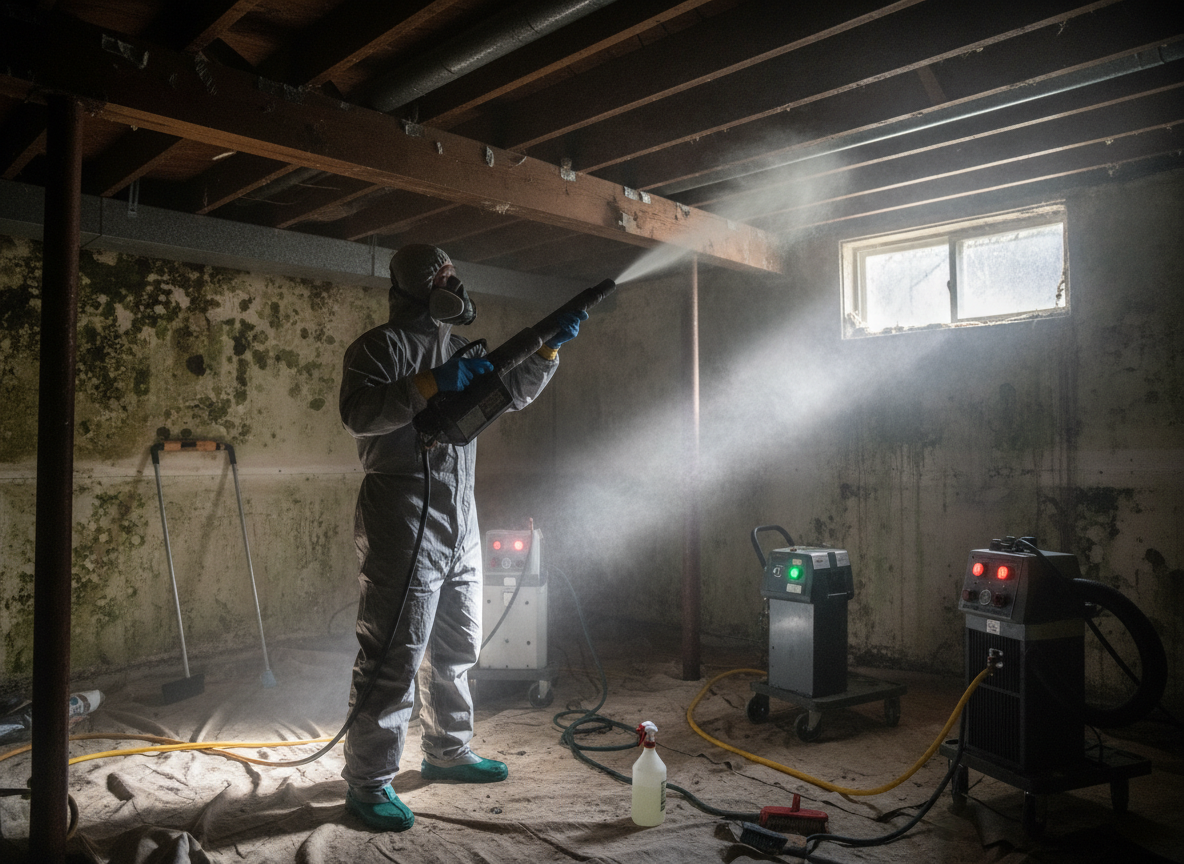
Many homes near the Skyforest Post Office and along Kuffel Canyon Road have pier-and-beam foundations with limited access, so standard surface treatments leave residue in joist pockets. We combine negative-air machines with hydroxyl generators sized for the mountain humidity levels, then apply encapsulants that withstand freeze-thaw cycles without cracking. Running Springs and Lake Arrowhead properties share the same granite soil that holds water against foundations, so we always trace drainage patterns from the road cutouts down to each structure before sealing.
Air sampling after treatment confirms spore levels have dropped below outdoor baselines typical for this elevation. Because the area sees sudden afternoon thunderstorms even in summer, we install moisture barriers and recommend quarterly checks on attic vents that commonly clog with pine needles and snow.
Technician insight
In Skyforest, the thing that catches most people out with odor removal mold is how snow piled against the north side of cabins along Kuffel Canyon Rd melts slowly into pier-and-beam voids that never fully dry before the next storm; homeowners keep smelling it because they only treat the visible ceiling stain instead of pulling the insulation that stays damp against the cold ground.
Persistent Musty Odor After Winter Thaw
A Skyforest homeowner near the post office reported a recurring smell in the living room each spring. Inspection found water tracking from a roof valley into the attic insulation above a bathroom. We removed the saturated material, ran hydroxyl treatment through the shared ductwork, and added ridge-vent extensions. The odor did not return after the next snow cycle.
How it works
- 1
Source Identification
Inspect attics, crawl spaces, and wall cavities using moisture meters and borescopes to trace water from roof edges or foundation contact points common after snow melt.
- 2
Containment Setup
Isolate affected zones with plastic sheeting and negative pressure to prevent spore migration through the open floor plans found in many Skyforest cabins.
- 3
Physical Removal
Remove saturated insulation and drywall sections, then HEPA-vacuum all surfaces before applying antimicrobial agents formulated for cold-weather reactivation.
- 4
Odor Neutralization
Run hydroxyl and air-scrubbing equipment for 48-72 hours while monitoring humidity to eliminate residual VOCs that travel between floors.
- 5
Final Verification
Conduct post-treatment air sampling and provide a written report noting any drainage corrections needed before seasonal rains return.
Pricing
Pricing varies with the volume of hidden cavities, number of HVAC zones, and whether crawl-space access requires excavation around granite outcrops.