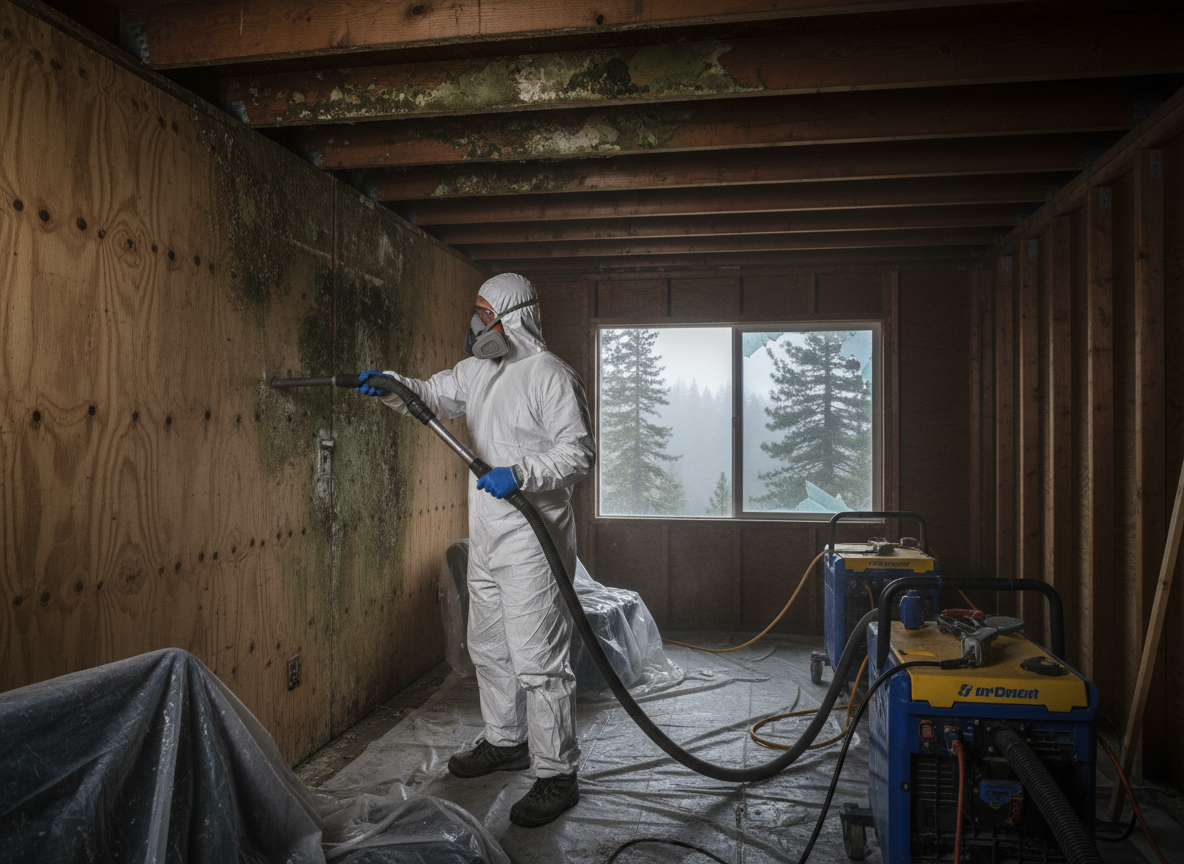
Skyforest sits at elevation in San Bernardino County where heavy winter snow followed by spring melt drives water into crawl spaces and under older wood-frame homes. Many houses near the Skyforest Post Office and along Kuffel Canyon were built before modern vapor barriers, so meltwater often pools against rim joists and creates hidden colonies behind baseboards. A proper remediation job starts with containment using negative air machines and plastic sheeting sealed to the structure, then removal of affected drywall or insulation rather than surface spraying alone.
Mild summers do not dry the mountain air the way desert heat would, so spores remain active longer after leaks from ice dams or roof penetrations. Technicians working from 951 Kuffel Canyon Rd routinely check attics above bedrooms where poor ventilation lets condensation form on the underside of roof decking. Removing the source moisture and drying to under 12 percent moisture content prevents the rapid regrowth that homeowners in nearby Lake Arrowhead and Running Springs report after incomplete jobs.
San Bernardino County building practices in these forested zones often left minimal foundation drainage, so soil moisture migrates through slab edges during the first warm weeks after snowpack melts. Remediation includes pulling carpet and padding in affected rooms, HEPA vacuuming all surfaces, and applying antimicrobial rinses only after the substrate is fully dry. Homeowners are advised to run dehumidifiers set to 45 percent during the shoulder seasons when outside humidity spikes with afternoon thunderstorms.
Clearance testing with air sampling confirms spore counts have returned to outdoor baseline levels before any reconstruction begins. This step matters most in Skyforest because the dense tree cover keeps shaded yards damp year-round and any missed pocket of mold quickly spreads back into living spaces once walls are closed.
Technician insight
In Skyforest the thing that catches most people out with mold remediation company is the spring snow-melt window. Homes along Kuffel Canyon and near the post office sit on slopes where meltwater runs under the crawl space for weeks; if you only treat the visible spot on the drywall the colony returns the next warm spell because the soil stays saturated.
Crawl Space Regrowth After Winter
A Skyforest homeowner noticed musty odor in a bedroom after the first spring thaw. Inspection found water migrating from the crawl space into rim joists of a 1970s cabin. Containment was set, saturated insulation removed, and the space dried for five days. Air sampling cleared the home and no regrowth appeared the following season.
How it works
- 1
Initial Inspection
Technician arrives within hours, maps visible and hidden moisture using meters and infrared, and identifies water entry points tied to snow melt or roof leaks.
- 2
Containment Setup
Plastic barriers and negative air machines isolate the work zone to prevent spores from moving into clean areas of the home.
- 3
Removal and Cleaning
Affected materials are cut out, surfaces HEPA-vacuumed, and antimicrobial treatment applied only after drying targets are met.
- 4
Drying and Verification
Commercial dehumidifiers and air movers run until moisture readings drop below 12 percent, followed by post-remediation air sampling.
- 5
Final Clearance
Independent lab results confirm safe spore levels before any reconstruction or homeowner re-entry.
Pricing
Upfront written quotes after inspection; final cost depends on square footage affected and materials that must be removed.