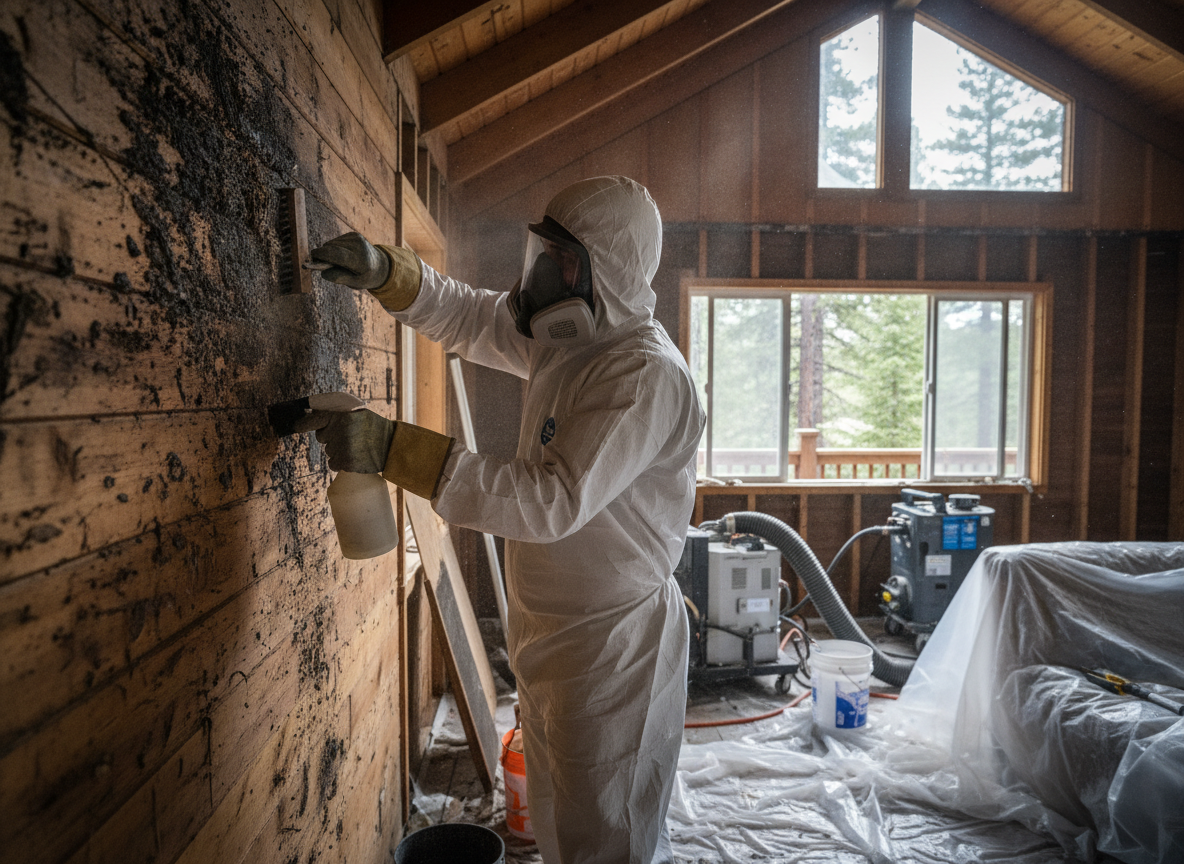
Skyforest sits at elevation in San Bernardino County where heavy winter snow followed by spring melt drives moisture into crawl spaces and attics of older wooden cabins. Mold abatement here starts with identifying hidden growth behind knotty pine paneling or in roof decking that standard visual checks often miss. Technicians use moisture meters calibrated for cold-climate wood and negative-air machines to keep spores from drifting into living areas during removal. Containment barriers must account for tight floor plans typical of 1950s-1970s builds near the Skyforest Post Office.
Abatement crews remove affected insulation and sheathing while treating framing with EPA-registered antimicrobials safe for occupied mountain homes. In Skyforest the work often includes clearing debris from ice-dam leaks that recur every few winters, especially on north-facing slopes shared with Running Springs properties. Proper disposal follows San Bernardino County solid-waste rules for moldy materials to avoid landfill issues. Homeowners should expect follow-up air sampling once surfaces are dry to confirm spore counts have returned to outdoor baseline levels.
Edge cases include mold in stone foundations where soil stays damp year-round and in bathrooms with poor venting that never fully dries after showers. Abatement teams document every step with photos for insurance claims common after winter storms. Skipping source correction, such as adding roof vents or grading away from foundations, almost guarantees recurrence within two seasons.
Technician insight
In Skyforest the thing that catches most people out with mold abatement is snowmelt pooling under 1960s cabins on Kuffel Canyon slopes; the melt soaks sill plates that never get checked until the smell reaches the living room.
Crawl Space Mold After Heavy Snow
A Skyforest home near Running Springs reported musty odors after winter storms. Inspection found standing water and black mold on joists from roof runoff that had frozen then thawed. Crews contained the space, removed wet insulation, treated framing, and added drainage grading. Follow-up sampling showed levels returned to normal within a week.
How it works
- 1
Initial Assessment
Technician inspects all accessible areas with moisture meters and thermal imaging to map hidden growth caused by snowmelt.
- 2
Containment Setup
Plastic barriers and negative air machines isolate the work zone so spores stay out of living spaces in compact Skyforest cabins.
- 3
Removal and Cleaning
Affected materials are removed, surfaces treated, and debris bagged for proper county disposal.
- 4
Drying and Verification
Dehumidifiers and air movers dry the structure; post-remediation sampling confirms levels match outdoor air.
Pricing
Cost depends on square footage affected, access difficulty in steep terrain, and whether hidden mold requires opening finished walls.