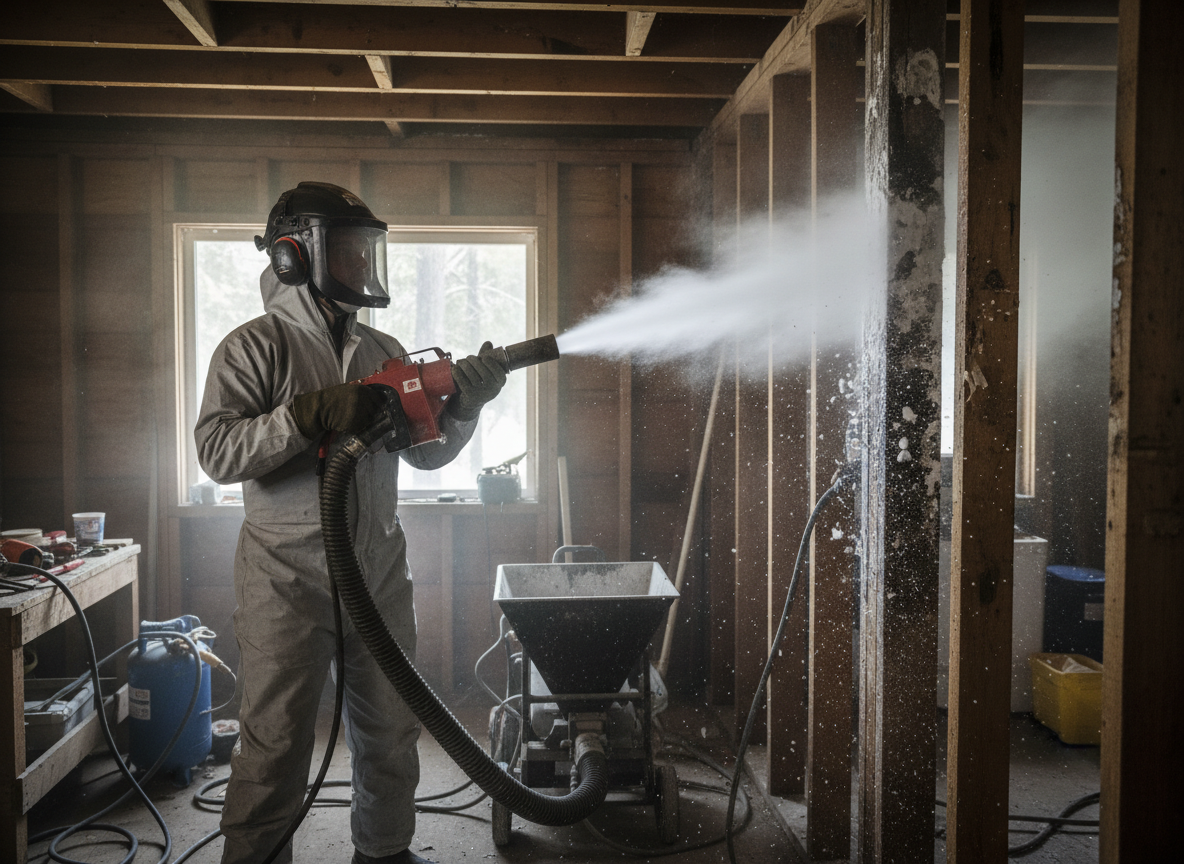
Dry ice blasting propels solid carbon dioxide pellets at mold colonies on wood framing and sheathing common in Skyforest cabins. The rapid thermal shock fractures the mold while the sublimation lifts residues without introducing moisture that could restart growth during mild summers. In San Bernardino County mountain homes built before modern vapor barriers, this method reaches into irregular surfaces of tongue-and-groove ceilings and exposed rafters where liquid cleaning would pool. Operators must monitor pellet feed rates because lower air density at Skyforest elevation reduces impact force, requiring closer nozzle distances on vertical studs.
Snow accumulation on roofs near the Skyforest Post Office often leads to ice dams that force water under shingles and into attic insulation. Once temperatures rise, the trapped moisture feeds mold on the underside of roof decking. Dry ice blasting cleans these surfaces in place without removing insulation batts, but technicians first verify that the sheathing is not delaminated from repeated freeze-thaw cycles common between Skyforest and Running Springs. Containment tents must account for wind patterns that funnel through narrow canyons, preventing pellet dust from drifting into living spaces below.
After blasting, residual CO2 off-gassing requires active ventilation for at least thirty minutes in tightly sealed Lake Arrowhead-adjacent homes. Hidden mold behind baseboards or in floor joists over crawl spaces demands separate access cuts because the dry ice stream travels in straight lines. Homeowners should expect minor etching on soft pine surfaces if pellet velocity is not reduced, and any remaining moisture source such as a leaking skylight must be corrected before final clearance testing.
Technician insight
In Skyforest, the thing that catches most people out with dry ice blasting mold is how repeated freeze-thaw cycles in crawl spaces under 1960s cabins along Kuffel Canyon Road allow mold to hide behind insulation that homeowners assume is dry after the first thaw.
Attic Mold Following Ice Dam on Kuffel Canyon
A Skyforest homeowner reported a musty odor after spring snow melt. Inspection found black mold on roof decking where an ice dam had pushed water under shingles. Dry ice blasting cleaned the sheathing and rafters without chemicals. Follow-up ventilation and a roof edge repair prevented recurrence.
How it works
- 1
Initial Assessment
Technicians inspect attics, crawl spaces, and wall cavities for visible mold and moisture sources linked to winter snow melt.
- 2
Containment Setup
Plastic barriers and negative air machines isolate the work area to prevent spore migration through Skyforest cabin layouts.
- 3
Dry Ice Blasting
Pellets are applied at controlled velocities to remove mold from wood without abrasion or added water.
- 4
Cleanup and Ventilation
Residues are HEPA-vacuumed and the space is ventilated to clear CO2 before re-entry.
- 5
Final Verification
Air sampling confirms mold levels have returned to normal background ranges for the mountain environment.
Pricing
Cost depends on square footage treated, access difficulty in older mountain homes, and whether additional moisture sources require separate repairs.