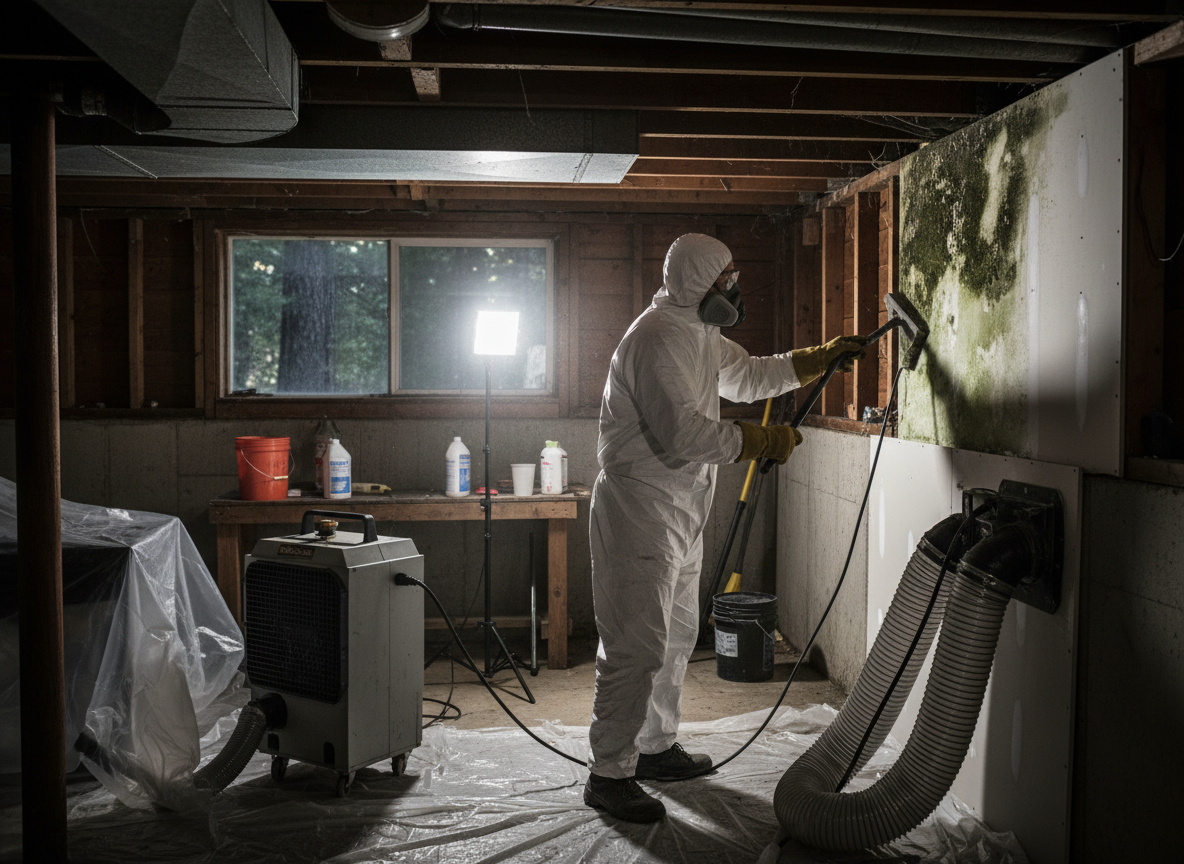
Skyforest sits in San Bernardino County at elevation where cold snowy winters drive repeated freeze-thaw cycles that push water through roof penetrations and into attics of older cabins. Once spring arrives the trapped moisture feeds mold on roof decking and insulation before mild summers mask the problem behind finished ceilings. Crews arriving from 951 Kuffel Canyon Rd must stage equipment on narrow driveways and use negative air machines sized for small mountain footprints rather than large suburban layouts.
Containment in these homes often means sealing off half-story spaces and stairwells instead of whole floors because the steep terrain limits exterior access. Technicians check behind cedar paneling and around skylights that leak during heavy snow loads, then remove affected material without disturbing the remaining structure that may still be sound. Post-removal drying focuses on ridge vents and gable ends that stay closed most of the winter, preventing the airflow homeowners assume is happening.
Edge cases include crawl spaces dug into the slope where groundwater from snow melt migrates under the sill plate and up into floor joists. Standard residential protocols must be adjusted because many Skyforest homes predate modern vapor-barrier requirements, so crews install temporary dehumidification tied to existing electrical service rather than running long cords across shared driveways near the Skyforest Post Office.
Technician insight
In Skyforest the thing that catches most people out with 24 hour mold removal is how snow melt from the mountain winters pools in the low spots of crawl spaces on older homes built into the slope around Kuffel Canyon. Homeowners think the cold keeps everything dry but once the pack starts thawing the water travels under the sill and feeds mold on the underside of the floor that never sees sunlight.
Attic Mold After Heavy Snow
A Skyforest homeowner noticed a musty smell in the upstairs bedroom after the first big winter storm. Inspection revealed water had entered through a ridge vent blocked by ice and soaked the insulation above the master closet. Crews contained the space, removed the wet material, and ran drying equipment for two days until readings returned to normal.
How it works
- 1
Initial Assessment
Technician inspects attic, crawl space, and wall cavities for visible growth and moisture readings while documenting affected materials.
- 2
Containment Setup
Plastic barriers and negative air are placed to isolate the work zone from living areas, accounting for tight mountain home layouts.
- 3
Material Removal
Contaminated drywall, insulation, and wood are cut out and bagged for disposal following county guidelines for mountain properties.
- 4
Drying And Verification
Air movers and dehumidifiers run until moisture levels drop, then clearance testing confirms the space is ready for rebuild.
Pricing
Upfront quotes provided after inspection; cost driven by square footage, access difficulty, and extent of hidden growth.