2026-10-17 ·
Dealing With Mold Growth After Heavy Snowfall In Skyforest
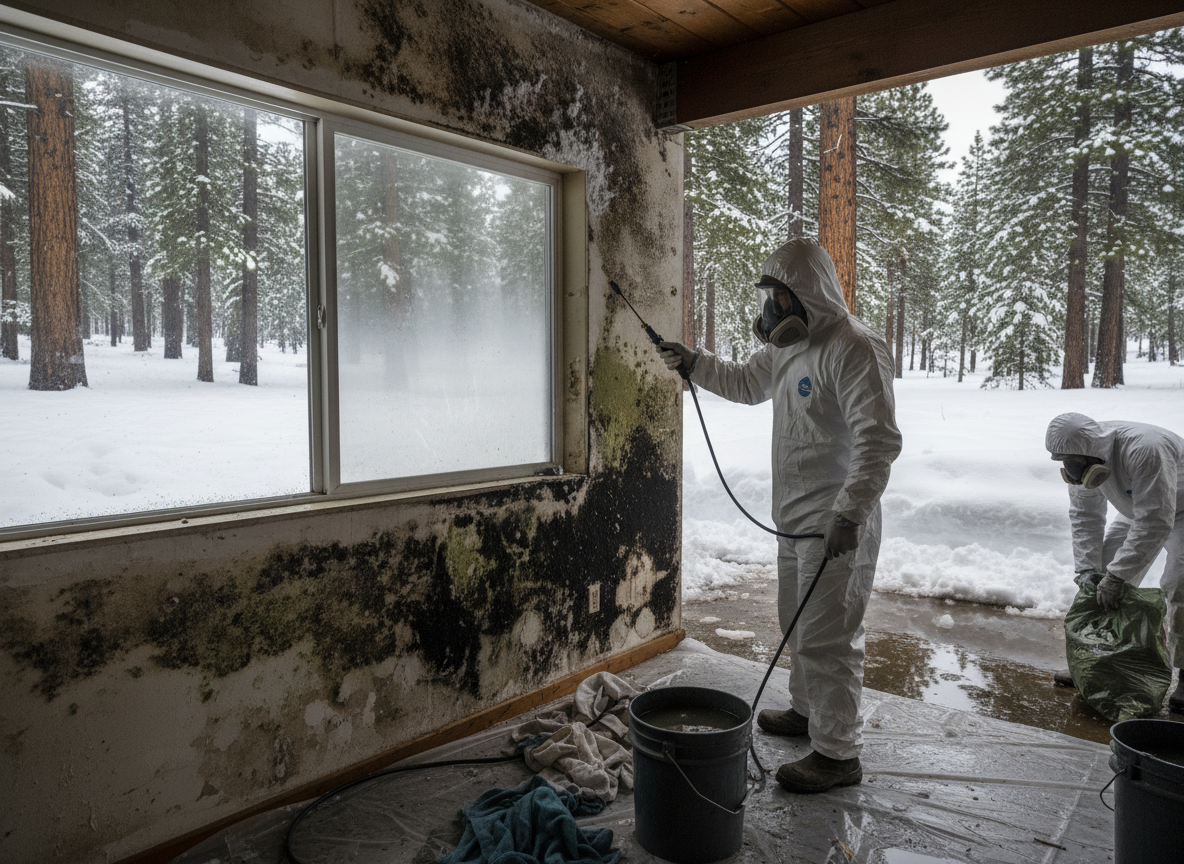
Heavy snowfall in Skyforest creates mold growth when meltwater seeps into attics, wall cavities, or crawl spaces and stays wet for more than 48 hours. Homes built on the slopes near the Skyforest Post Office commonly see this pattern because steep roofs and older vent systems allow snow to drift and then thaw slowly against sheathing.
How Meltwater Enters Mountain Homes
Skyforest sits at elevation in San Bernardino County where winters bring repeated freeze-thaw cycles. Snow piles against north-facing walls and under eaves, then melts during mild afternoons. The water runs under shingles or through ridge vents that were not designed for the volume of runoff common after storms that also affect nearby Lake Arrowhead and Running Springs. Once inside, the moisture soaks insulation and wood framing that stays cold and dries slowly because daytime highs rarely exceed 50 degrees in January and February.
Older homes in the area often lack modern underlayment or have gaps around plumbing vents that become entry points. Crawl spaces on sloped lots collect the runoff at the lower end of the foundation, where soil stays damp for weeks. These conditions differ from the milder summers that follow, when evaporation finally occurs but mold colonies have already formed on the back side of drywall and sheathing.
Early Signs After Winter Snow
Homeowners notice musty odors near upstairs ceilings or in closets along exterior walls first. Dark staining along baseboards or around attic access panels appears once the snow has melted for 10 to 14 days. In Skyforest properties, condensation on windows during the day combined with visible water streaks on rafters points to hidden moisture that will support growth if left alone.
Checking insulation for dark spots or feeling for soft drywall near roof lines helps locate the affected zones before the problem spreads into living spaces. Because the mountain climate keeps humidity trapped during cold periods, these signs often show up later than they would in lower elevations around San Bernardino.
Practical Steps to Stop Growth
Remove standing water and improve airflow immediately after the snow melts. Open attic vents on dry days and use fans to move air across wet surfaces. If insulation is soaked, cut out the affected sections so the framing can dry fully before any new material goes in. For hidden areas behind walls or in crawl spaces, professional inspection identifies the full extent without unnecessary demolition.
Link the moisture event to water damage mold remediation when meltwater has already reached finished surfaces. In attics, attic mold testing and removal targets the rafters and sheathing that stay damp longest after heavy snow. Follow-up testing confirms the source has been eliminated before repairs close the cavities.
Long-Term Adjustments for Skyforest Properties
Improving roof ventilation and adding baffles keeps future snow from blocking airflow. Sealing foundation vents on the downhill side of crawl spaces reduces the chance of meltwater pooling against sill plates. These changes address the specific pattern of winter moisture that repeats in Skyforest and the surrounding communities each year.